 Fo Guang Shan Buddha Museum


A Visit in Wonder and Kindness
Fo Guang Shan Buddha Museum: A Visit in Wonder and Kindness
◎Text & Images ∕Prof. Michael D. Kennedy (Brown University) & Amy Dolan
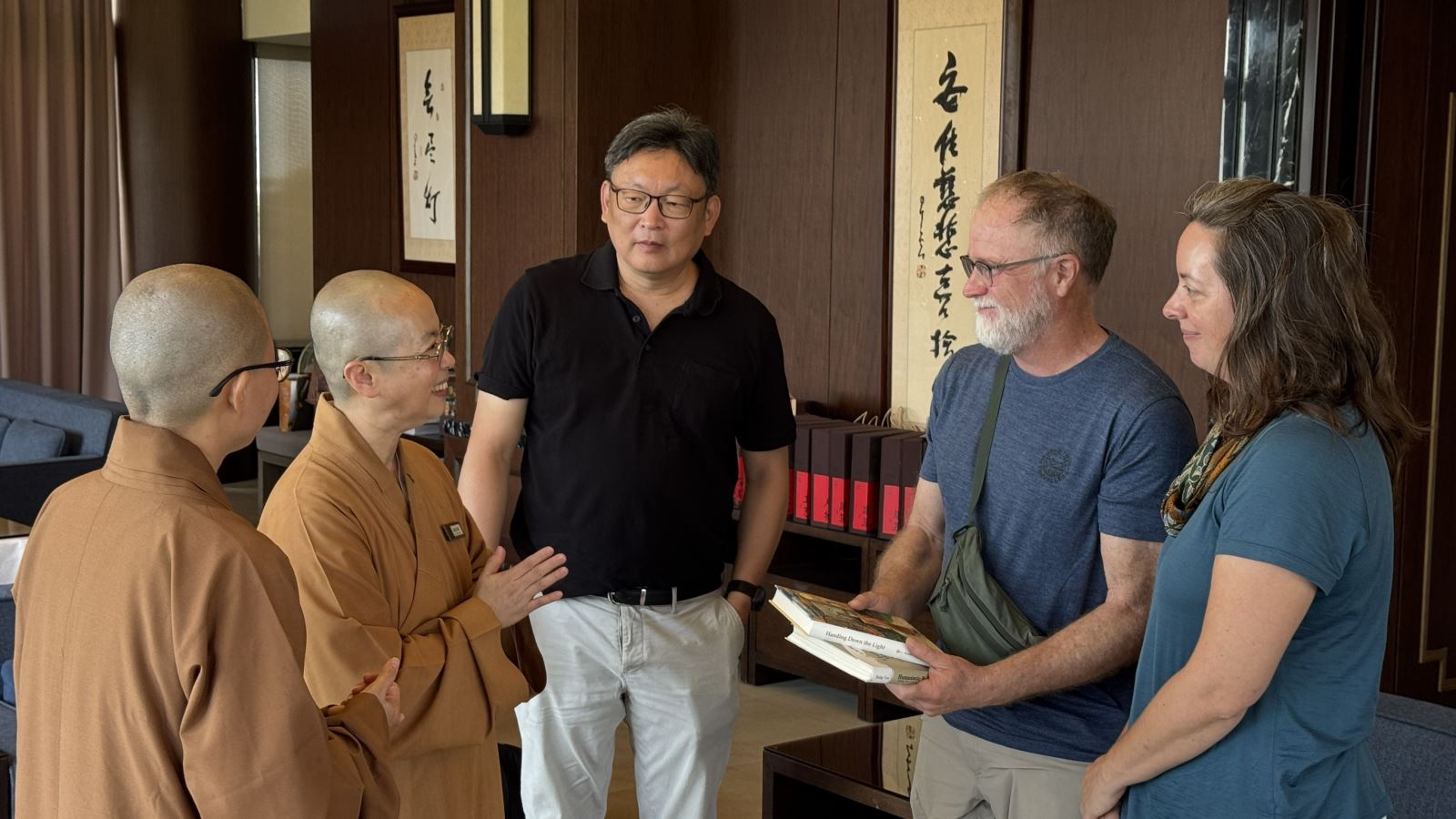
Professor Kennedy having a brief meeting with Deputy Director Venerable Yong-Jung, accompanied by Dean Dr. Yung-Jong Shiah
Editor's Note: Michael D. Kennedy is a sociologist and professor at Brown University, whose scholarly work spans the globalisation of knowledge, civil society, and social movements. He is the author of Globalizing Knowledge (2015), a study of how ideas, expertise, and intellectual networks cross borders and reshape societies. In early 2025, Professor Kennedy and his partner Amy Dolan embarked on a sabbatical contemplative journey — visiting Taiwan, Singapore,Aotearoa New Zealand, and other destinations — to research the globalisation of contemplative practices including Tai Chi, yoga, pilgrimage, meditation, and martial arts. Their Taiwan visit,arranged in part through the warm hospitality of sociologist and physician Dr. Duujian Tsai,took them to health clinics, universities, Tai Chi communities, and cultural institutions across Taipei, Kaohsiung, and Yilan. The visit to Fo Guang Shan Buddha Museum in Kaohsiung was,by Professor Kennedy's own account, the most impactful single day of their entire journey. The following account is adapted from his personal reflection, shared publicly after the visit.
We approach the end of a most fulfilling and meaningful fortnight in Taiwan — so rich that it is hard to represent it in a single reflection. Perhaps most impactful, however, has been the kindness that has surrounded us: most profoundly by the people we know and have come to know, as well as those who have reached out to help us on the streets of this island.
That impact on my unconscious is not surprising given the day we had at Fo Guang Shan Buddha Museum in Kaohsiung City. Our day began with a meeting with the Venerable Yong-Jung, Deputy Director of the Museum, accompanied and enabled by Dr. Yung-Jong Shiah, Dean of the Buddhist College at Fo Guang University in Yilan. We can read texts and practice mindfulness on our own, but to be in the presence of these souls dedicated to the pursuit of enlightenment has an effect. To be surrounded by their manifest joy and sincerity, their expressions of love and welcome, is impactful. To be invited to return for a week and stay in the neighboring monastery is hard to resist, especially when even a brief meeting as we had moves a serene sense of something beyond the apparent.
That was only magnified by the tremendous museum we visited following. Not unlike the conclusion of our Camino in the Cathedral at Compostela, the richness and monumentality of the Museum inspired awe — not only for the size of the great Buddha or the sheer beauty of the jade reclining Buddha, or the amazing craftsmanship apparent in the Buddha and Five Hundred Arhats at Vulture Peak. Rather, the named donations by millions on the walls of the museum's pathways signal the breadth and depth of this Humanistic Buddhism movement. One should readily consider Venerable Master Hsing Yun as an incredible movement entrepreneur for building here in Taiwan, and ultimately globally, a spiritual mobilization out of the most traditional of acts. In 1998, he received from a Tibetan master a relic — a tooth that remained following the Buddha's Parinirvana — and out of that assignment of confidence across Buddhism's lineages, this massive museum and movement has developed into one of the most consequential Buddhist assemblages in the world.
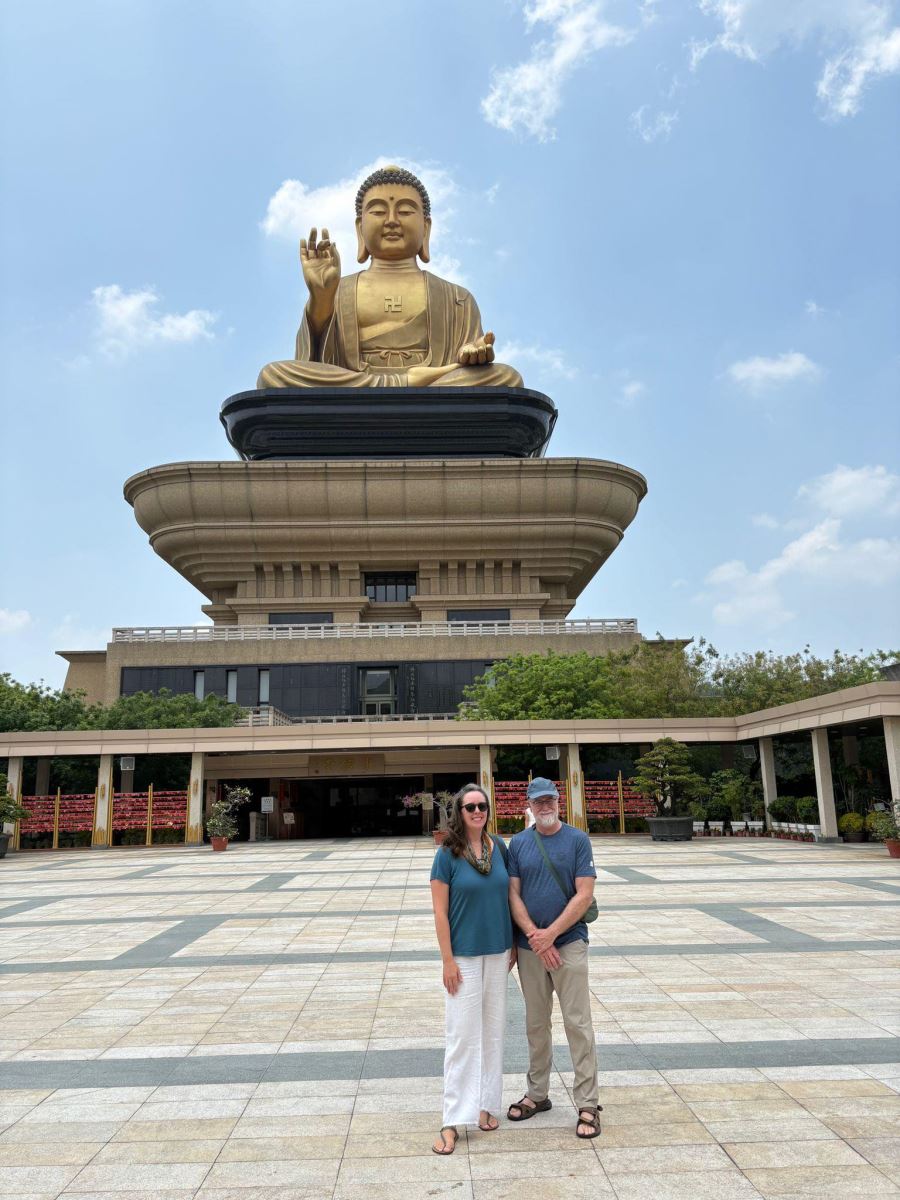
Professor Kennedy and Dolan at the Big Buddha Terrace
During our meeting, and then during the tour following — led by a former microbiologist named Sunny — the space the museum creates once passing through the Gate of Perfect Ease and the Gate of Liberation is remarkable. We leave the anxieties of everyday life, of this temporary existence, behind and move into a Buddha land, one that attempts to manifest that enlightenment, that unity, that sense we have already within us but only needs to be released. The kindness, the joy, the helpfulness of people in this space was magnificent. For the people who live here and work here, there is an invitation to joyfulness and enlightenment that is hard to resist — especially when we see its effects in everyday life across Taiwan. The world does not need to be organized around costs and benefits. Love-power might be an alternative.