 Fo Guang Shan Buddha Museum


How Taiwan Became a Refuge for Buddhism
THE PRINCE’S JOURNEY - How Taiwan Became a Refuge for Buddhism
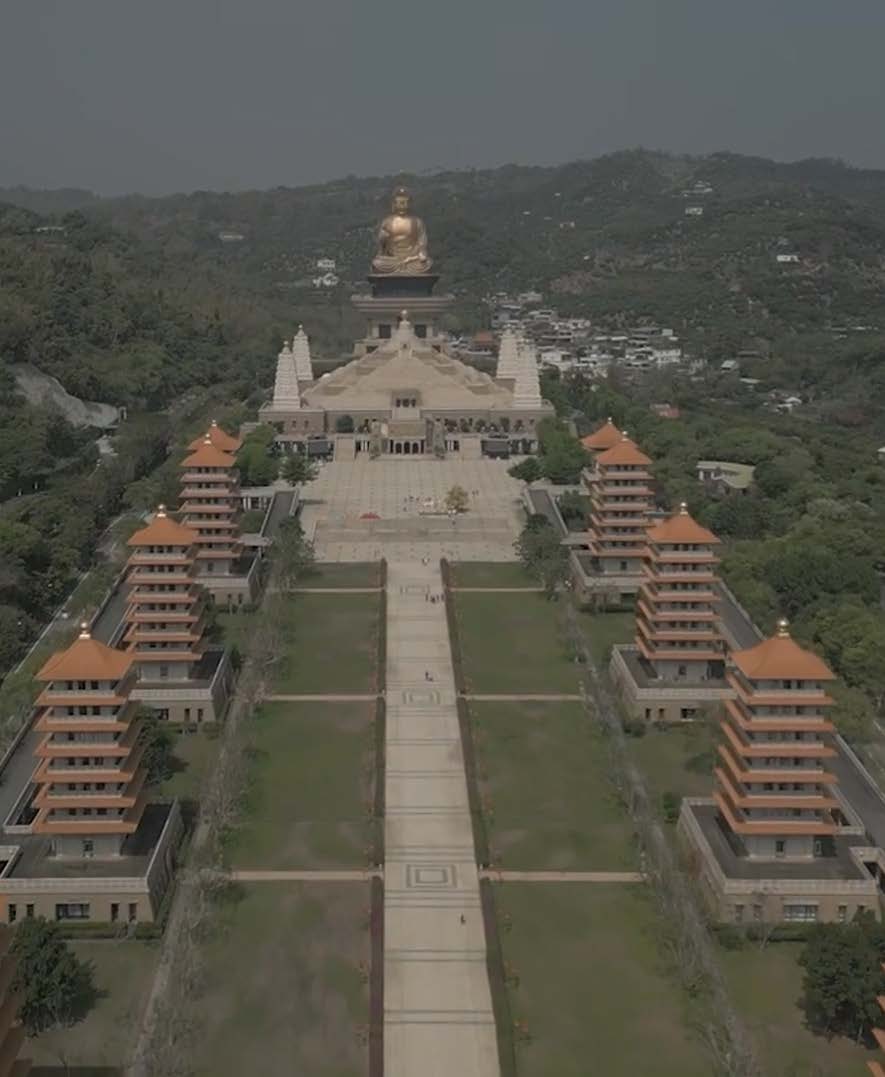
The Buddha Museum complex at Fo Guang Shan Monastery in southern Taiwan. The walkway, or alley, leads from the front hall, with gift shops and a Starbucks, to a 350-foot-tall copper-cast Buddha statue.Credit.Maxime Fossat
A Sinicized form of the religion has been preserved on the island, where daily life itself now sometimes seems like an exercise in Buddhist practice.
By Aatish Taseer Photographs by Maxime Fossat
The Prince’s Journey How Taiwan Became a Refuge for Buddhism
This is the final chapter of Aatish Taseer’s three-part travel feature tracing the spread of Buddhism across Asia. Click here to read the first chapter, on Nepal, and here for the second chapter, on Thailand.
I HAD FELT the breath of Chinese Buddhism while I was still in Thailand. At Ayutthaya, the former royal capital outside of Bangkok, my Thai guide, Pratch Rujivanarom, suggested that we stop in at Chao Mae Thapthim, a shrine to the Chinese goddess of the sea, who was revered in Taiwan as Mazu. There, standing amid the paper lanterns, we met Nathakorn Taraprapha, the 40-year-old secretary of the Hainan Association, the local branch for the diaspora from the southern Chinese island, who said that Mao Zedong’s decade-long Cultural Revolution, beginning in 1966, had destroyed “all aspects of traditional Chinese belief.” When China began to open up in the early 1980s, he added, the mainland looked to communities like his in Southeast Asia, where Chinese culture was still intact.
The idea of Chinese culture held in trust for the mainland when it was ready to have it back was both preposterous and suggestive. It would acquire special meaning for me in Taiwan, but that morning in Ayutthaya was where I first learned about the subtle ways in which Taoism, a Chinese religion akin to what Shinto is to Japan or Hinduism to India, had merged with Buddhism to form a complex system of belief. Through Nathakorn, I was introduced to my first Taoist deities like the Jade Emperor, a Zeus-like figure. Taoism had evolved in China over 2,500 years. Its great thinker Lao Tzu — the author of one of its foundational texts, the “Tao Te Ching” — was roughly contemporaneous with Siddhartha Gautama, living around the sixth century B.C. Taoism is intimately concerned with balance and harmony, with that tantalizing dialectic of yin and yang, light and dark. It’s also fundamentally additive, absorbing folk religions and deities, new texts and customs, so that it can feel almost like the sum of Chinese tradition as it developed over centuries. What the English poet William Blake surmised in the 18th century — “Good & Evil are here both Good & the two contraries Married” — Taoism had known since its inception, recognizing that light and dark forces work together to produce equilibrium. In Taiwan, the richest, most industrialized society I had planned to visit on this trip, I’d be free to look at the ways in which Taoism had fertilized Buddhism to form a syncretic religion. Chinese Buddhism was an amalgam — and in Taiwan it had been preserved, as if in amber, from the ravages of the Cultural Revolution.
Buddhism, born on the Indian subcontinent in the sixth century B.C., has no holy book, no commandments, no prophets. Yet its teachings spread throughout Asia, mingling with local beliefs and customs along the way — and changing the continent forever.
In the three-part cover story for T’s Travel issue, Aatish Taseer follows Buddhism’s journey through Nepal, Thailand and Taiwan.
Plus: we share a map and timeline of the religion’s transmission across the East, a glossary of Buddhist terms, a snapshot of the great diversity of Buddhist monuments and an essential reading list. Click here to read Hanya Yanagihara’s editor’s letter.
THE TAXIS IN Taipei smelled faintly of cigarettes. Peering through gauzy black window curtains, I saw dark hills framed against a night sky, red-lettered signs in Chinese and apartment buildings underlit in gold, so that they looked like Las Vegas casinos. There’s a certain kind of kitsch that’s the hallmark of all the Chinas, official and unofficial, but what I had not been prepared for in Taiwan was a dilapidated charm that reminded me of the films of Hong Kong’s Wong Kar-wai. Coming in through the gold entrance of the Cosmos Hotel in central Taipei under many international flags, I found myself in a world of porcelain and fake flowers. “It’s as if Japan and China had a baby,” a friend said of Taiwan. This felt true, not just in the presence of Japanese colonial buildings but also in the ubiquity of its high-quality convenience-store chains grafted onto a grottiness of stained tiles, cramped windows with grills and peeling tinted glass, of tube-lit offices full of the scent of decaying paper and damp side alleys bathed in neon light.
Here was an island with an Indigenous Austronesian culture upon which had come waves of Chinese migration in the 17th century; then there ensued 50 years of Japanese colonization (1895-1945). After World War II, just as the people of Taiwan thought they might wriggle free of the ambitions of the great powers, there arrived Chiang Kai-shek and Madame Chiang — his wife, Soong Mei-Ling — who, having lost the civil war in China to Mao, ruled over the island with a dictatorial fury amplified by exile and defeat. A 20-minute walk away from the Cosmos was the Chiang memorial. Its grandeur, all white with sloping blue-tiled roofs, was meant to convey solidity, continuity and permanence but managed somehow to do the opposite, almost as if scale were being asked to compensate for the underlying uncertainty of the builders as to how long their sojourn in Taiwan would be.
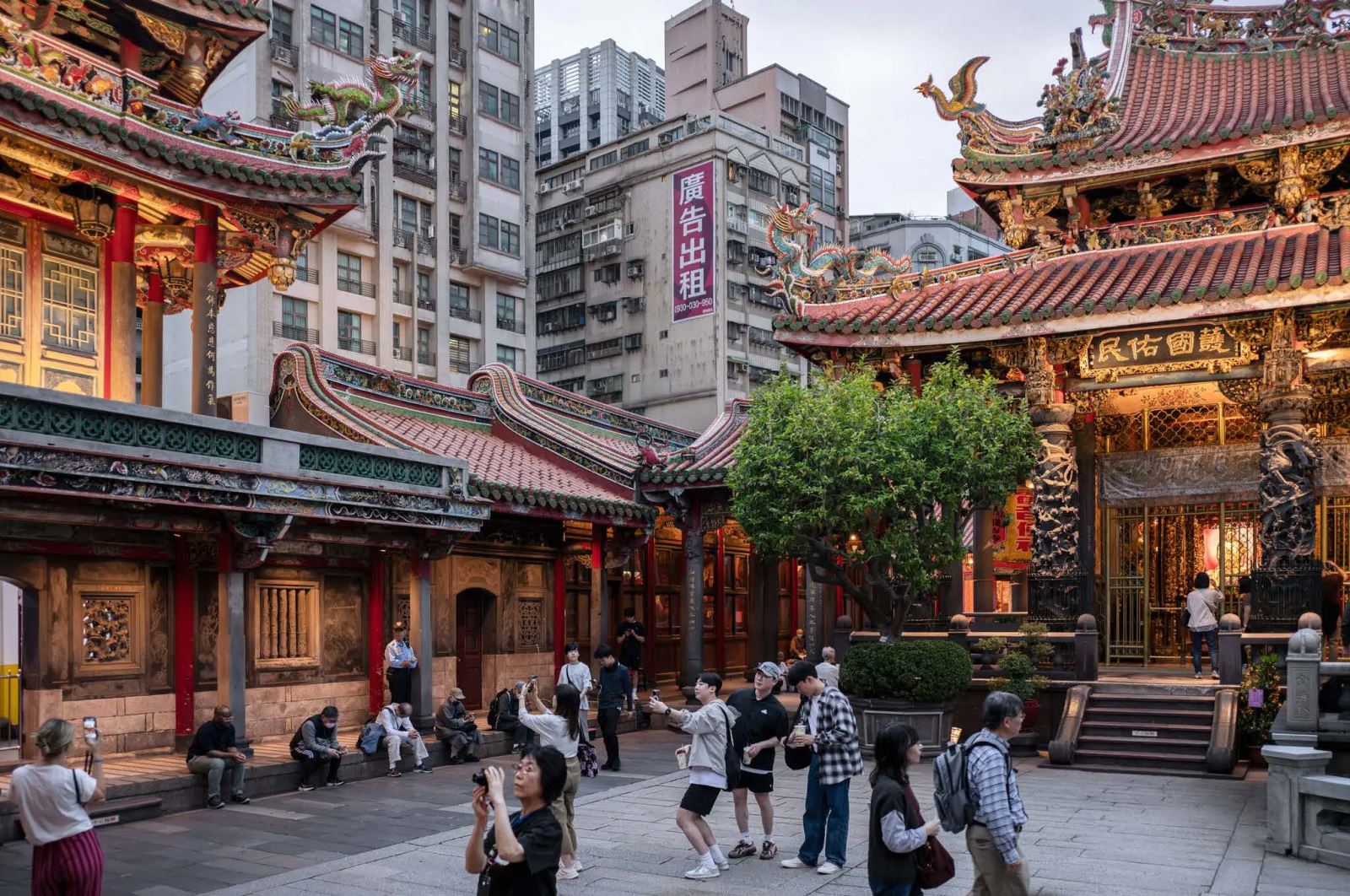
The 18th-century Lungshan Temple, in the center of Taipei, where worshipers make offerings to Taoistdeities like Kuan Ti the protector.Maxime Fossat
Upstairs, the generalissimo sat, Lincoln-like, on a great bronze chair. Below was a whole museum devoted to the life and times of Chiang, down to every shred of memorabilia, where I never so much as glimpsed the name of Mao. One minute, the generalissimo was the president of all of China, receiving the Japanese instrument of surrender in 1945 at Nanjing, the next minute — which is to say, four years later — he was in Taiwan as if on an extended holiday. If you didn’t know why, the museum stoutly refused to tell you. All this was part of the surreality of Taiwan: the island that was a repository of old China, even as it was regularly besieged by Chinese war games. Nothing about daily life gave any of this away. The Taiwanese displayed a nerve, whose motto might be described as “Stay chic and carry on,” that would have put the British during the blitz in the shade.
I was at the beginning of a pilgrimage of sorts. It would take me by high-speed train around the circumference of the 245-mile-long island. My focus was the Four Great Mountains — the four main Buddhist sites — arranged like nodal points at the ends of the island. In the north was Dharma Drum, in the west Chung Tai Chan, in the south Fo Guang Shan and in the east Tzu Chi. The monasteries and institutions were relatively new, many built in the 1960s and expanded during Taiwan’s boom years in the ’80s and ’90s, but they were like a re-creation of the cosmology of the mainland, where there also existed a grouping of sacred mountains arranged according to the five cardinal directions. (The fifth is the center, which symbolizes the earth.) It was one of the many self-conscious ways in which Taiwan mirrored the mainland, preserving in miniature the essence of the great enterprise that was Chinese Buddhism.
The two-way traffic of monks between India and China that continued for almost 1,000 years led to one of the great outpourings of intellectual curiosity and artistic production. Beginning in the first century A.D. during the Han dynasty, when two Indian monks, Kasyapa Matanga and Dharmaratna, established the White Horse Temple in Luoyang, on the eastern edge of the Silk Road, China became the single most important center for the dharma outside India. It was where Buddhism was first tested as a major international creed, and where it eventually underwent Sinicization before being exported to Korea and Japan. China, with its capital at Chang’an, known by the eighth century as “million-man city,” was the premier site for the translation of Buddhist sutras and treatises, an enterprise that was matched in scale perhaps only by the industriousness of medieval Toledo, in Spain, where, under the auspices of Alfonso X, Arabic texts were translated into Castilian with a similar hunger. It was in China that the new doctrine, pollinated by indigenous systems of thought, led to the development of Chinese schools of Buddhism such as Pure Land, Tiantai and Chan (or Zen). I longed to visit a Chinese holy mountain such as Wutai, where Manjushri, the bodhisattva of wisdom, is said to reside.
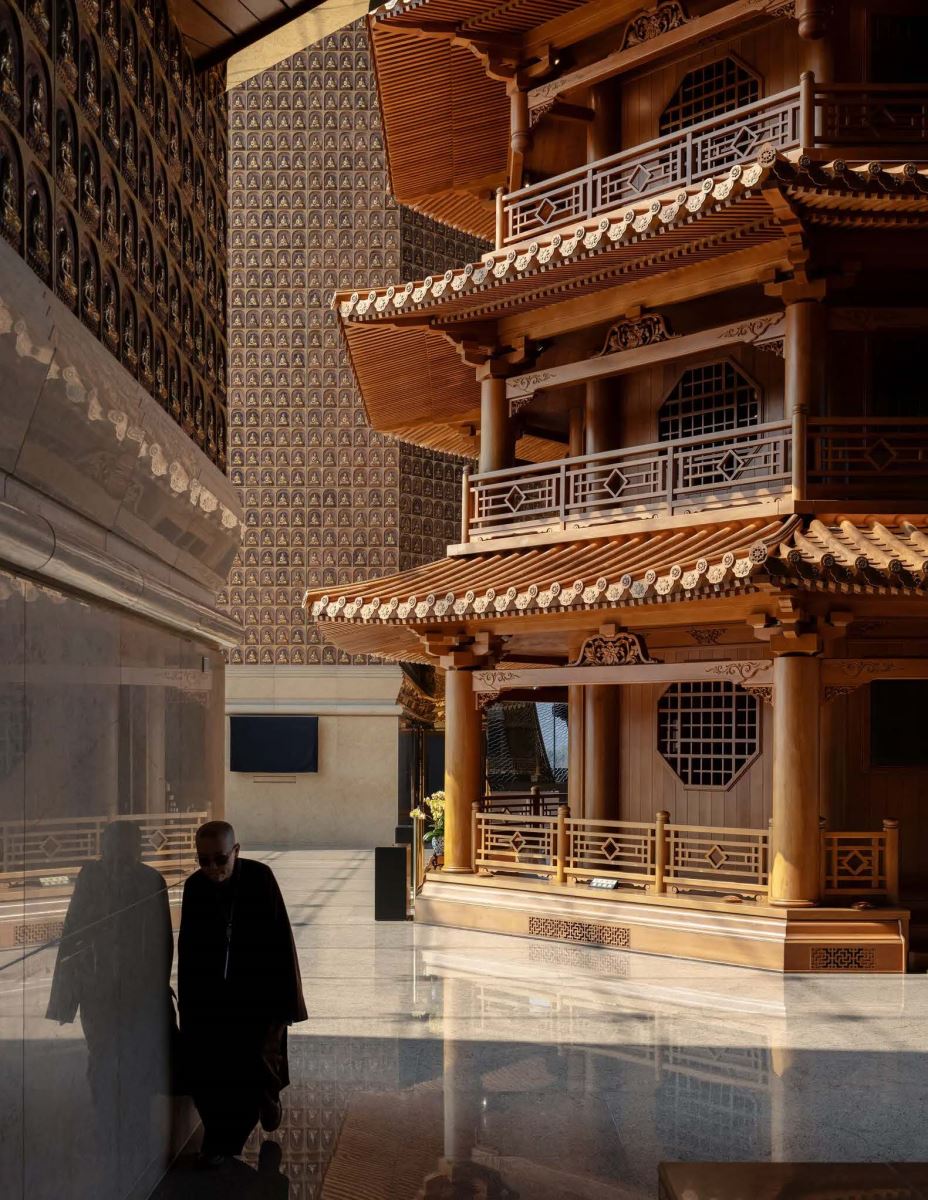 The stepped pagoda in the Hall of Ten Thousand Buddhas at Chung Tai Chan Monastery, designed inthe 1990s as a forward-looking example of 21st-century Buddhist architecture.Maxime Fossat
But it was not to be. My colleagues at this newspaper on both sides of the Taiwan Strait were clear that the chances of my getting a visa as a journalist for “a sensitive topic” such as religion were unlikely. Moreover, as Mattias Daly, 42, my guide in Taiwan, pointed out, even if I did, I would be so heavily managed that I might see only what the Chinese authorities wanted me to see. Daly, who was raised in Philadelphia and Chicago, had spent a decade in China before moving to Taiwan eight years ago, where he was now pursuing a Ph.D. in translation. When we first met at the Cosmos Hotel, he was in the process of arranging a car for us to visit the first of Taiwan’s Four Great Mountains.
The doctrine had come to the island with the Chinese in the 17th century but, after the Communist takeover of the mainland in 1949, and especially after the Cultural Revolution, with its full-scale assault on religion — which included the enforced disrobing of monks, the destruction of relics and manuscripts and the seizure of places of worship — Taiwan became a refuge for Chinese Buddhism. In 1950, there were hundreds of thousands of monks and nuns in China but just a few thousand a decade later. As was often the case in the history of the dharma, what seemed new was in fact very old. In premodern China alone, there had been four waves of imperial oppression of Buddhism, beginning in the fifth century and ending in the 10th. It had faced similar repression under the Joseon dynasty (1392-1897) in Korea — and under the Meiji Restoration in Japan starting in 1868, during a period of intense nationalism, the establishment of Shinto as a state religion was to the detriment of Buddhism, unleashing a wave of state-sponsored persecution, known as haibutsu kishaku (literally, “abolish Buddhism and destroy Shakyamuni [Buddha]”).
These cycles of ebb and flow were integral to the history of the doctrine, which had never lost its dangerous air of cosmopolitanism. It made me wonder if it came down to something as simple as the background of the founder. He was not, as with Christianity, the son of a carpenter; or an orphan like Muhammad. He was a prince, and the high-mindedness of his concerns, even when simplified for the laity, never quite allowed Buddhism to escape the charge of elitism, especially as its transmission was almost always a top-down affair.
In Nepal, I was almost in India, able to understand the language, living with the simultaneity of Hinduism and Buddhism. In Thailand, though Hinduism as a practiced religion fell away, the presence of India as a culture was still strong. In Taiwan, it was as if I had broken out into another world, with only the faintest gossamer thread of continuity, which was the Buddha’s teaching, remaining.
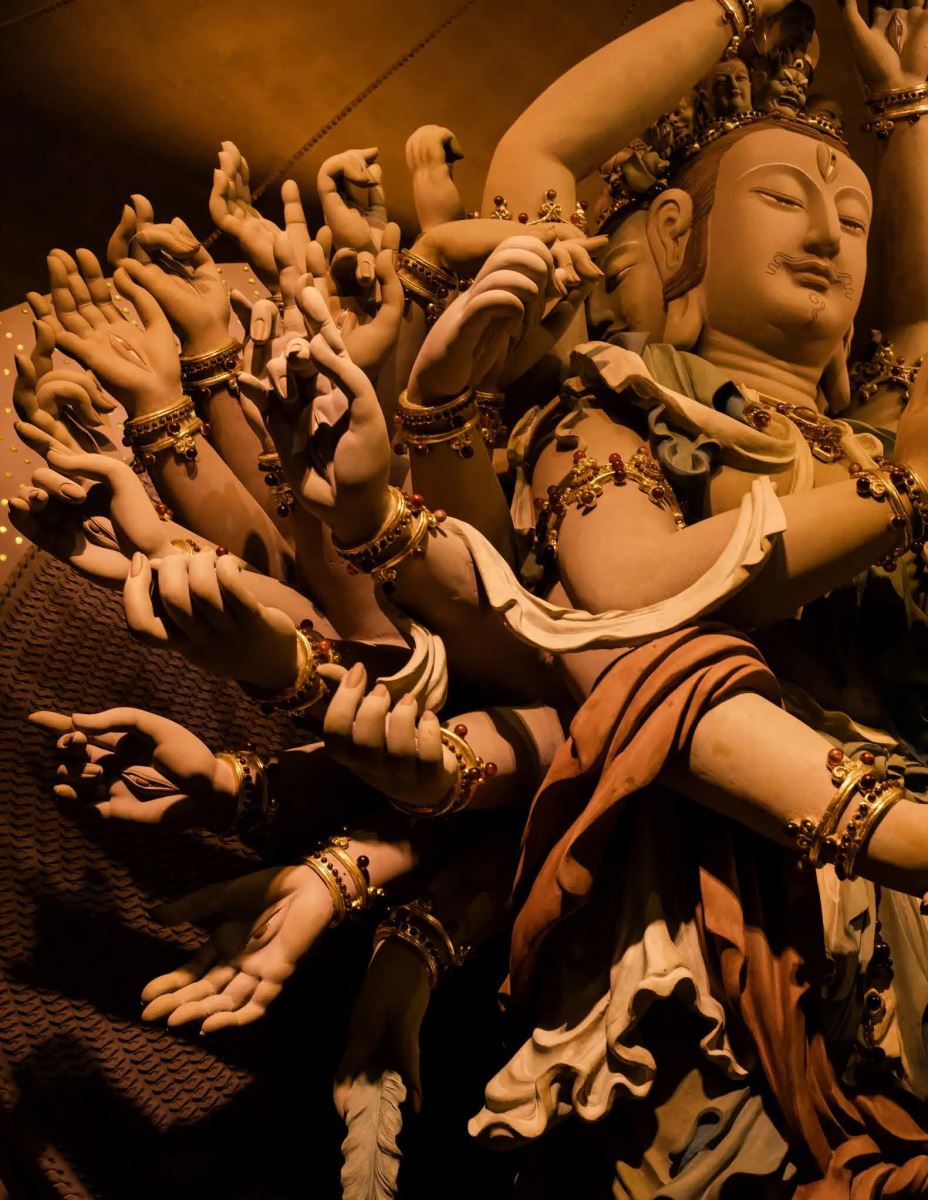
The glass thousand-armed Avalokitesvara, a bodhisattva of infinite compassion, part of the museumcollection at Fo Guang Shan Monastery.Maxime Fossat
ON OUR FIRST morning together, Daly and I stopped at a local shrine near the island’s main judicial building, designed by the Japanese colonial architect Kaoru Ide and completed in 1934. There were red lanterns and golden wheels with the names of donors on them, but looking inside the sanctum at the pantheon of figurines assembled in rows on a steel table under red light, all save the Buddha were unfamiliar to me.
Daly was surprised to see San Tai Tzu, a mischievous Taoist deity, whom he described as a “deliverer of divine justice,” elevated to the front row. At the center of the Buddhist row was Kuan-yin, the bodhisattva of compassion, but not appearing here in the form of the 1,000-armed Avalokitesvara, as I had seen in Thailand. The journey east, and the subsequent Sinicization, had robbed the bodhisattva of gender. This particular Kuan-yin struck me as an androgynous Chinese matriarch, eyeing me shrewdly across a mahjong table.
As we walked in the direction of the Lungshan Temple, among the most important places of worship in Taipei, Daly relayed what a folk herbalist had told him: Taoism’s contribution to Buddhism was that it brought the “purple light” of mischief to Buddhism. It was a world of gods at play, of sensuality and laughter, of taking pleasure in earthly delights. It was exactly what I felt the Hindu gods did for Buddhism too; they mitigated its austerity; they added humor and frolic, making room for a willful flirtation with desire, even when you know it is futile. Here were two great old sensual Asian cultures, India and China. Between them lay the connective tissue of Buddhism. Both, in their own ways, acknowledged the greatness of Gautama Buddha, yet both, simply by virtue of representing an affirmative view of life — a pre-Buddhist status quo ante — contained a counterpoint to the severity of the doctrine. It was not that it was comfortless; it was. But it was also a little humorless and, in its clean dismissal of the phenomenal world, it turned this site of our greatest joys, heartbreaks and passions, laughter and grief, into something merely to be endured.
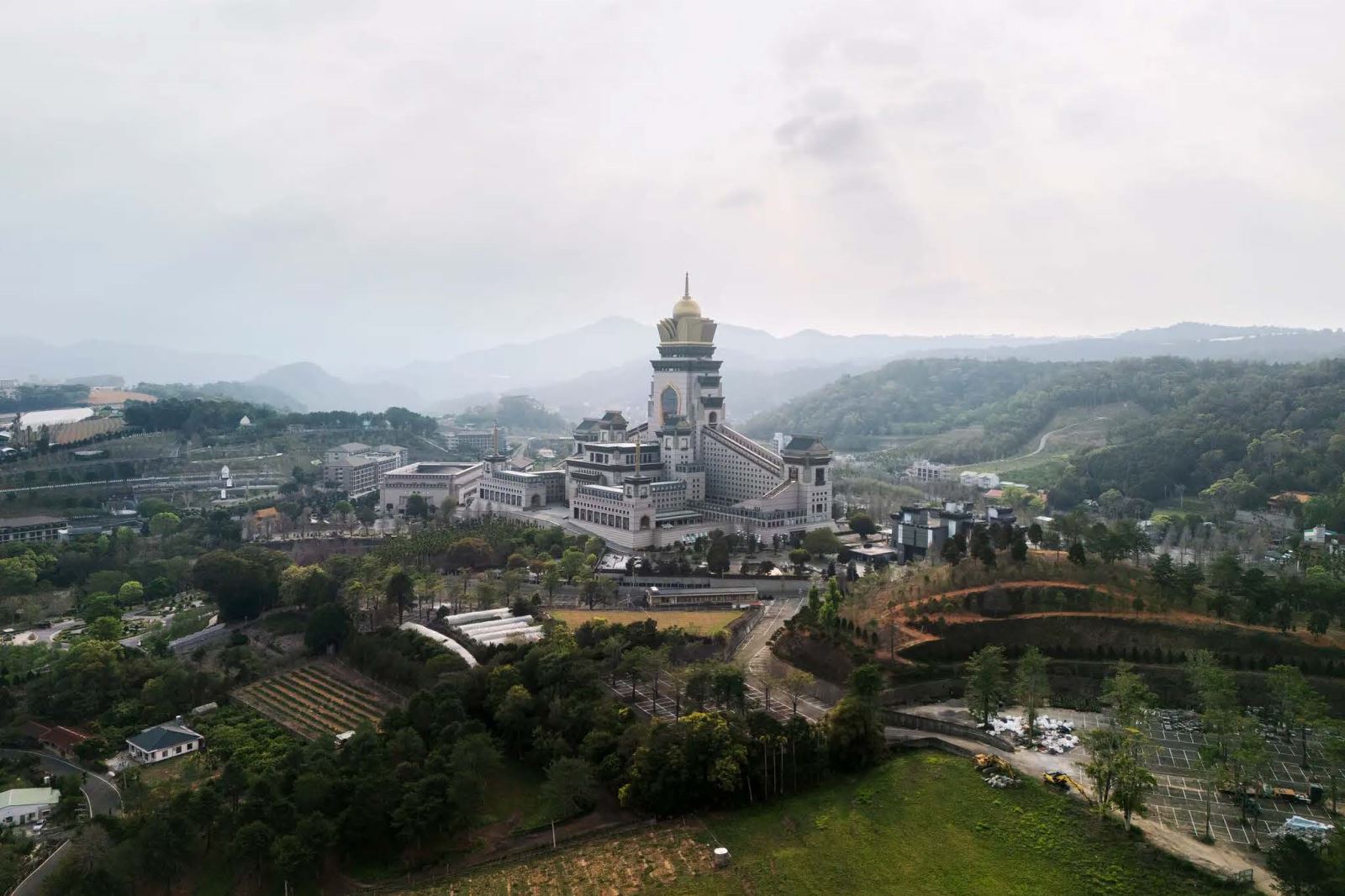
Chung Tai Chan Monastery, about an hour outside of Taichung. Maxime Fossat
The Buddhist distaste for the world, in all its fullness, sometimes led to the doctrine acting as an adjunct to an older religion. It was valid as a critique of what had gone before but somehow lacked an autonomous inner life. It was why, in society after Buddhist society, when people felt in need of the world again, in all its richness and variety, they invariably turned back to the imperfect but purple-lit creeds of their forefathers, be it shamanism, Taoism, Shinto or Hinduism.
At Lungshan, a refuge of ponds, waterfalls and intricately carved granite columns surrounded by a cityscape of weather-beaten towers and billboards, it was possible to feel, in a reversal of what I had seen in Thailand, that Buddhism was being made to bear witness to the daily practice of Taoism. In a crowd of schoolgirls in navy blue blazers and skirts, older worshipers, selfie takers and teenagers in hoodies, I spoke to Liu Ming, 59, who had come with her friend because she wanted to have a special votive candle lit for her. Her friend, she explained, was born in the Chinese Year of the Fire Horse, which was upon us, and there was a conflict between her chi, a life force in Taoist cosmology, and that specific zodiac year. “We’re here to pacify the gods of the sexagenary cycle,” Liu said. In the Chinese zodiac, a tradition dating back more than 2,000 years, there are 12 animals and five elements. Together these form 60 possible configurations of animal and element, such as “wood rat” and “metal snake,” which in turn interact with each calendar year in auspicious and inauspicious ways. “If there’s a conflict between the chi of the different ancestors, your luck gets worse and there’s a higher chance of misfortune and accidents,” she said. These could manifest as illness and depression, but also difficulties in work or romance.
Behind the main sanctum, which contained bodhisattvas, was a shrine to the martial Taoist deity, Kuan Ti, often portrayed with a sweeping beard and his signature green dragon crescent blade. “Both police officers and gangsters bow to Kuan Ti for protection,” Daly said. All around us in a looping drone played the chant “Namo Amituofo,” a homage to Amitabha Buddha, which is the essence of Pure Land Buddhism, and in which recitation plays a central role in spiritual liberation. At a subsidiary shrine dedicated to Yue Lao, or the Old Man Under the Moon, the Taoist deity of marriage and love, binding those destined to be together with an invisible red thread, the heartsick and the heartbroken approached, seeking guidance.
The year before in Japan, I had seen Shinto serve as a religion of the day, dealing in all that pertained to the physical and mundane, while Buddhism was relegated to the regions of night, concerned with death, the afterlife and metaphysics. I was curious to know if as clean a separation existed here, but everyone, including Daly, said it was much more of a happy jumble.
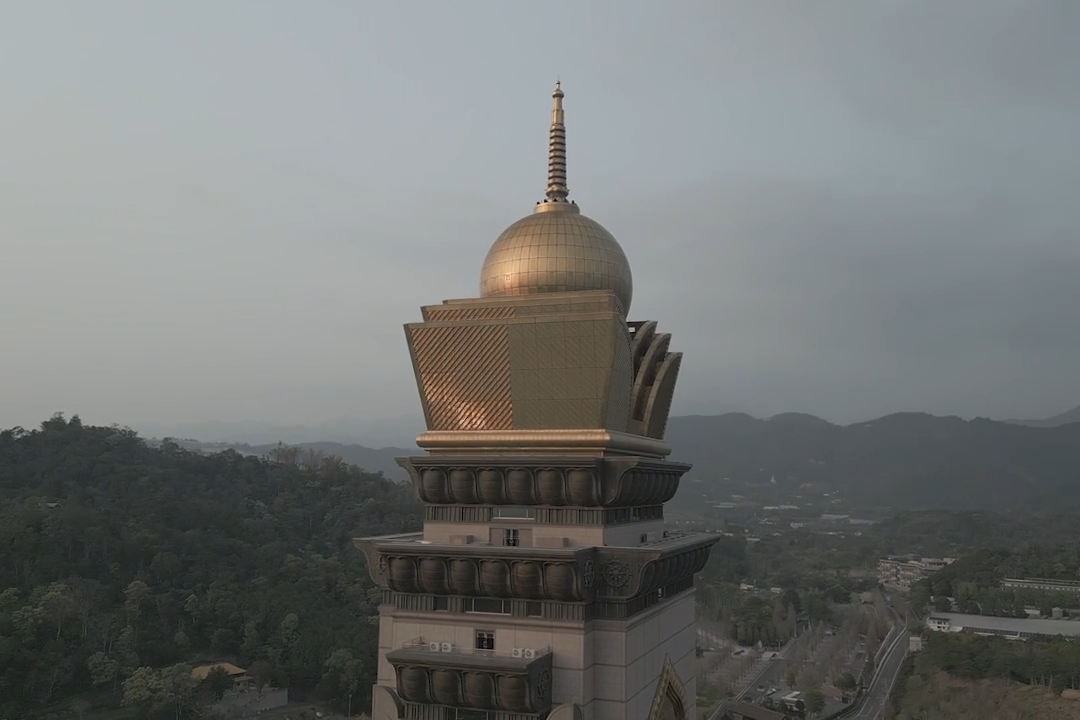
The Chung Tai Chan Monastery incorporates traditional accents such as Chinese eaves and tented roofs. At its pinnacle, the golden dome symbolizes the mani, or pearl, said to evoke “the inherent nature of all sentient beings.”CreditCredit.Maxime Fossat
YET BUDDHISM, FOR all its adaptability, lived with a distinct unease about its own capacity to absorb local religion, culture and belief. More than with any other Eastern religion, some of its practitioners could give voice to a real fear of contamination. That afternoon, on the outskirts of Taipei in a bare tiled room with a leather sofa, I sat with Shi Cheng Ting, a monk in his 60s whose severest indictment of Chinese Buddhism was that it had been debased into what he deemed a “folk” religion. The monk wore dark ocher robes. “Namo Amituofo” once again played in the background and, through a window, a train marked “Commuter” caught the afternoon sun, setting its long metallic body ablaze.
The monk had been part of a Tibetan Buddhist movement called Lamrim, which sought to introduce a structured system of spiritual advancement into a society that, in his view, was an assemblage of severed lineages. If pure Buddhism existed anywhere, Cheng Ting said, it was either in the southern transmission of Theravada that I had seen in Thailand or in Tibetan Buddhism. “The rest,” he said, “are all broken lineages.” When Cheng Ting began his fiery denunciation of Chinese Buddhism, I had imagined that he dated its decline to the modern era, to an event such as the Communist takeover of the mainland. But in his view, decay had begun after the Tang era in the eighth century and continued steadily apace. He saw a laity that glommed onto bits and bobs of this and that, dealing loosely in concepts for which they had no training or preparation.
In trying to explain his grievance with the word “folk,” he gave the example of the cult surrounding a 13th-century Chan (Zen) Buddhist monk called Ji Gong, also known as the Mad Monk, who was all purple energy, dissolute and drunken. We had seen his idol earlier in a shop selling statuary. He stood playfully over a barrel of alcohol. “What makes him special,” Ling Suyu, the shop owner, had said, “is that he ate meat and drank alcohol. The idea is that if you have Buddha in your heart, it doesn’t matter what your external behaviors are.”
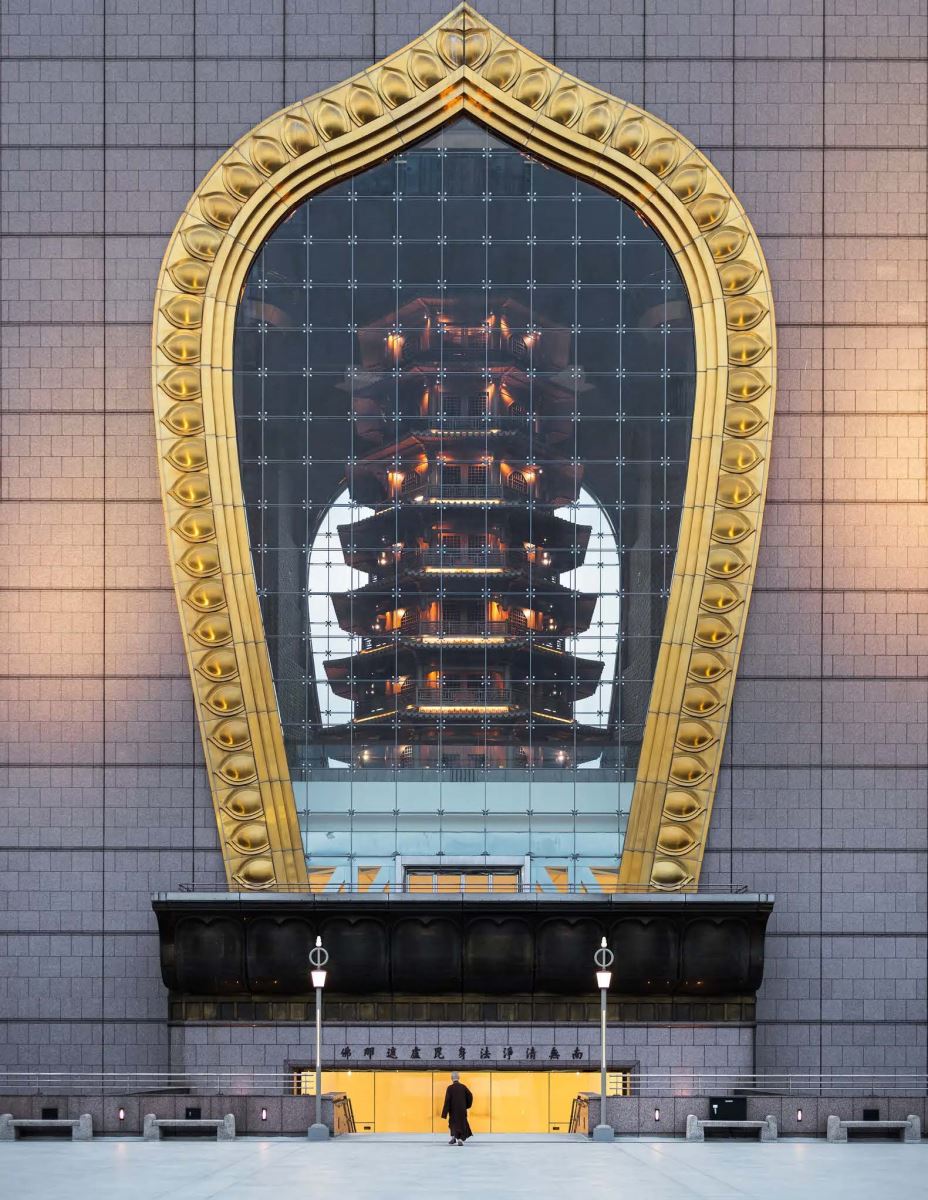
The teakwood pagoda inside the Hall of Ten Thousand Buddhas at Chung Tai Chan Monastery.MaximeFossat
If Taoism was the contaminant, it was as ubiquitous as the air in Taiwan. Earlier that day, Daly and I had been at a ceremony at the Hsing Tian Kong temple in downtown Taipei where women in pale blue robes used incense to perform a smudging ritual, waving the sticks up and down people’s bodies almost as if the smoke would banish maleficent influences. Taoists believed that the soul was made up of seven po and three hun, the former belonging to yin, a cool, darker feminine energy, the latter to yang, its diametrical opposite. If this intricate balance of po and hun was thrown out of whack, a young woman in the queue who lived in Michigan explained to me, people became susceptible to inexplicable illnesses and depression. It was why she was here — to have her equilibrium restored. Listening to her, I remembered feeling that Buddhism in Taiwan acted as an umbrella faith, giving validity to a whole world of local belief, ritual and superstition. When I asked Cheng Ting if he thought Taiwan could serve as a repository of Chinese Buddhism for the mainland, whose leadership he described as “satanic,” he shook his head vigorously. “If what we have here is a severed lineage,” he said, “then what function will it serve to transplant it to China?” Earlier, in an ominous reference to the impending event that but rarely spoke its name, he said, “If the same fate befell Taiwan that befell Tibet, Buddhism here would not survive, because it’s not authentic.”
The threat of being invaded by people with whom you share culture, history and language — “It’s not a question of if but when,” people often said here — followed us across the Tamsui river that night into New Taipei City, where we were meeting a Buddhist band called Animitta. Amid winding streets, which enclosed little Taoist shrines and were lined with squat houses of begrimed tiles and steel doors, a voice called out to us from the darkness. I saw a tall man with long, raven hair dressed all in black, with piercings and braces: “Hi, I’m Dusa. Like Medusa, but without the ‘me’ because we’re Buddhist.”
We soon found ourselves in the house of his bandmate, Noki, a visual artist with peroxide hair, drinking a lethal 58 percent, sorghum-based spirit called kaoliang. Animitta, a word I recognized from Sanskrit, is a simple negation of nimitta, which can be translated as “sign,” “cause” or “form,” among other meanings. It has a special valence in Buddhism, where there exists a core doctrine of interdependent origin that states that all phenomena, good and bad, arise as a result of causes and conditions and disappear when these conditions do, which is why they cannot be trusted, for all that is contingent is destined to fade. Sitting on the floor around a low wooden table, we watched videos of the band singing lyrics incorporating verses from the Heart Sutra, a seminal Mahayana text likely composed between the fourth and seventh centuries: “Form is emptiness, emptiness is form.”
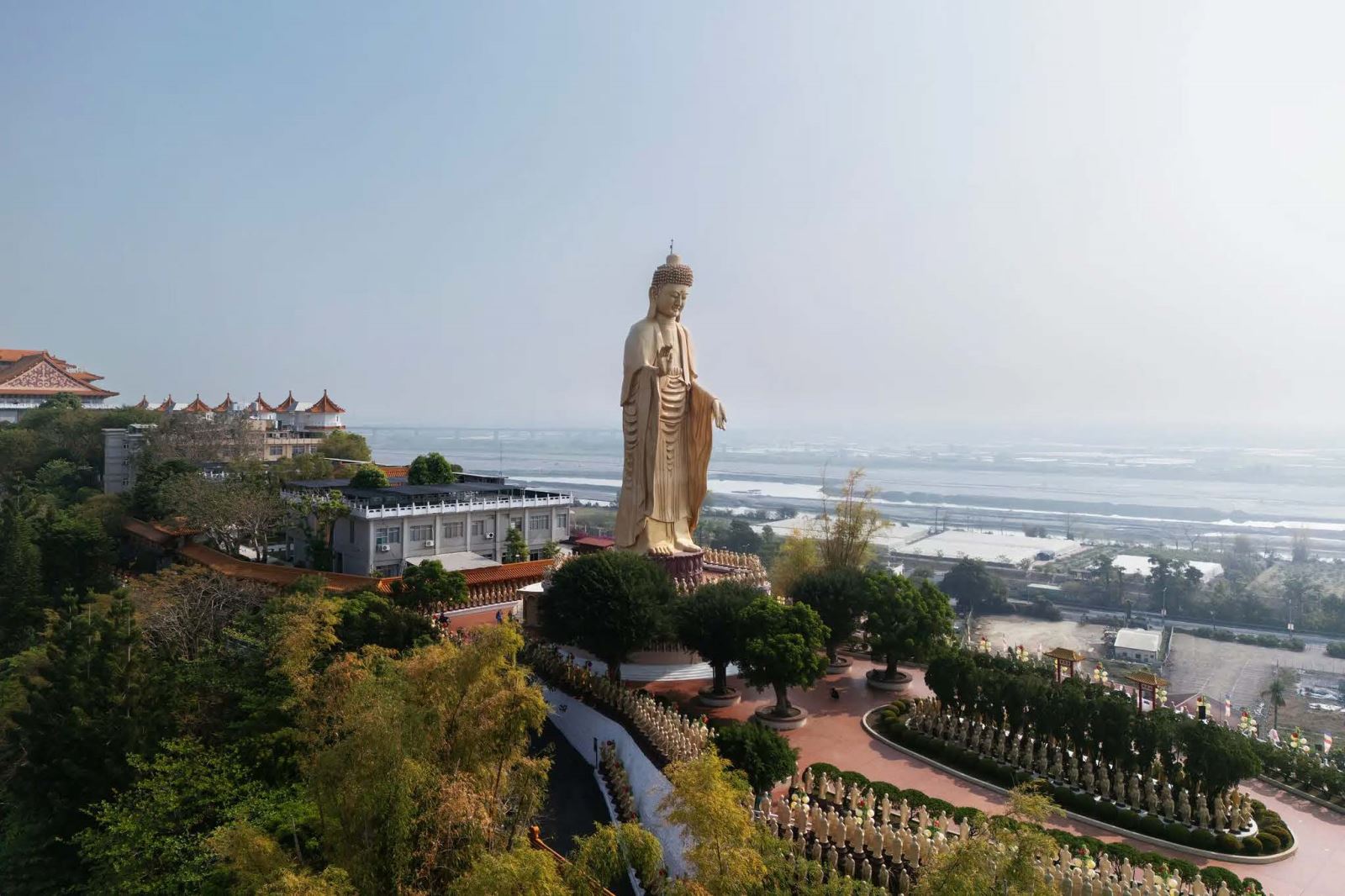
The Great Buddha statue at Fo Guang Shan Monastery.Maxime Fossat
On Noki’s patio under a breadfruit tree, a peaceable disagreement between the two bandmates left me a little shocked. Noki, in his 50s, grew up in a world where Mandarin, Japanese, Taiwanese Hokkien and Hakka were spoken interchangeably. He looked to the big powers — China and Japan — for a sense of identity. Dusa, in his 20s, had grown up much more invested in the island’s autonomy, taking special pleasure in its Indigenous culture, which his friends saw as lihai, or “awesome.” Noki, on the other hand, seemed almost to welcome the arrival of the Chinese. When I asked him, if he were to poll 10 friends, how many would be prepared to fight for Taiwan’s freedom, Noki said six. Dusa looked aghast. “Ten out of 10 of mine would stay and fight.” He quoted a Chinese proverb, translating it as “If you don’t see the coffin, you don’t see the tears.” The coffin made death real and brought forth the tears, just as the appearance of Chinese ships on the shores of Taiwan, he said, would make occupation real.
WHEN WE FINALLY set out for our circumambulation of the island’s four major monasteries and institutions, we started with Dharma Drum Mountain, just north of Taipei. It was a Xanadu of wishing pools, Kuan-yin statues and a bell upon which the whole Lotus Sutra (a central text for Tiantai Buddhism) was inscribed. It was also home to a liberal arts college. Our tour was led by Echo Shao, a lapsed Christian who said of her former faith, “When I used to pray, I felt nothing.” Taiwan wasn’t just more urbanized than Nepal and Thailand (here, around 80 percent of the population lives in cities) but in a region (which also includes China, Japan, South Korea and Hong Kong) with an aging population and falling birth rates. These demographics, as a recent analysis from the Pew Research Center found, have had a direct effect on the sangha: Between 2010 and 2020, the number of people who identified as Buddhist in these five East Asian societies fell by some 32 million, or 22 percent, accounting for a global decline in the number of Buddhists worldwide. The flip side of industrialization is that there exist in Taiwan certain progressive attitudes, especially when it comes to women, that were unlike any I had encountered so far. Here, nuns outnumbered monks, sometimes by as much as 3 to 1.
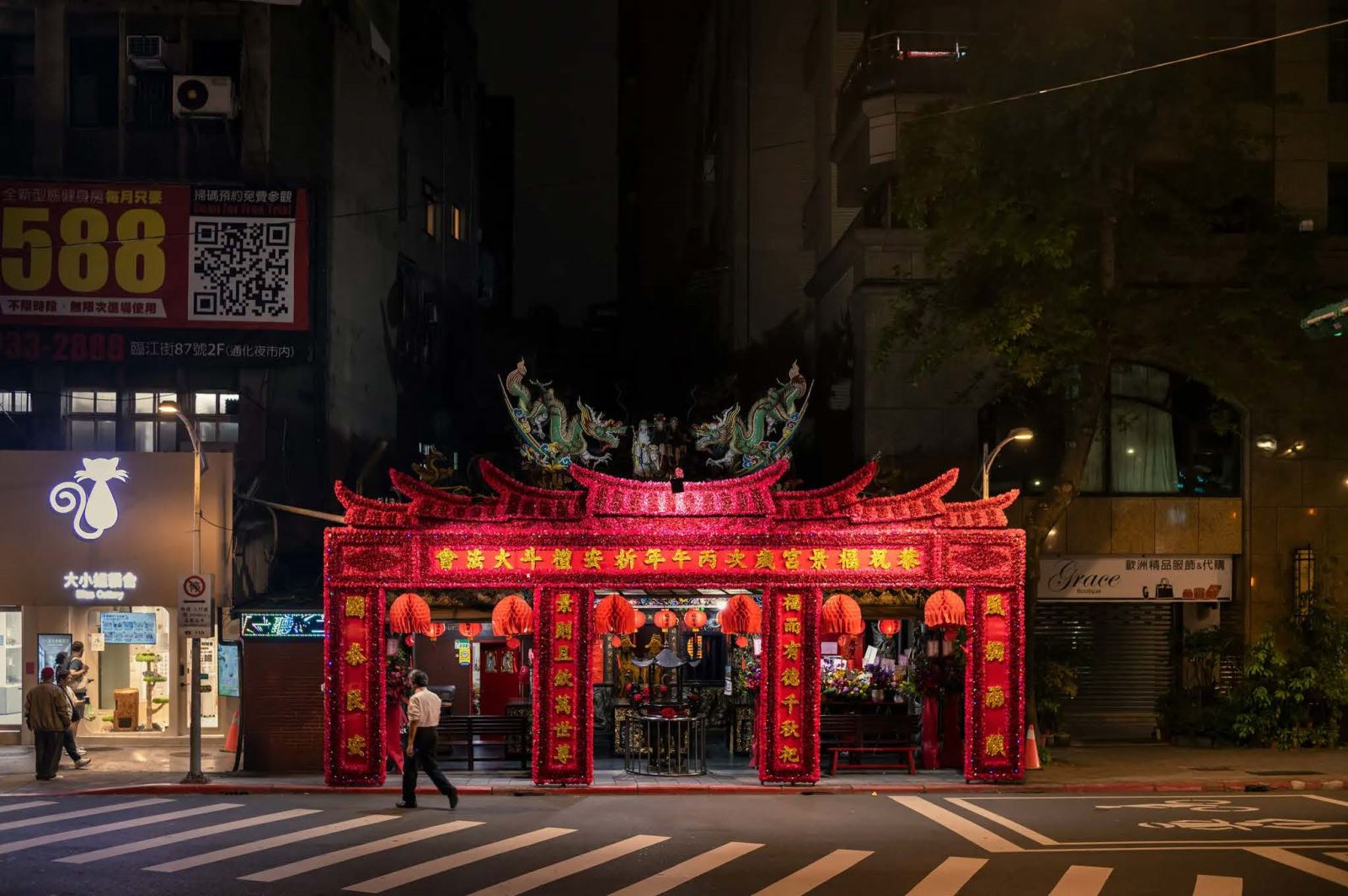
Fu Jing Temple in Taipei.Maxime Fossat
We were at the end of our tour when I saw Shi Chang Hui, with her shaved head, spectacles and jieba, or precept scars, tiny burns on the scalp from moxa (dried mugwort stuck to the skin and lit using incense) to signify her commitment to monastic rules. She was matter-of-fact about why Taiwan had retained its female lineages, explaining that Chinese Buddhism was the beneficiary of an ancient line of bhikshunis that had survived into the present. When I asked her if Taiwan felt an obligation to the worldwide sangha to revive female lines, she said that the second most important figure in Tibetan Buddhism, the Karmapa — the head of the Karma Kagyu school — “has sent Tibetan nuns to be ordained in Taiwan but when they go back to Tibet, their position is not recognized.” Despite the fact that the number of nuns dwarfs the number of monks here, men almost always take positions of senior leadership, such as abbot. “The women,” Chang Hui said with a hint of dismay, “tend to vote as a bloc.”
Taiwan was always the first to apologize for its Buddhism, as if purer forms existed elsewhere, yet in this one regard of female ordination it was the bearer of an authenticity that was part of the radical nature of Gautama Buddha, who, when confronted with the dilemma of female participation 25 centuries ago, ultimately chose to include women as candidates for ordination. This is a tradition that has produced, as the translator Charles Hallisey observes in his introduction to “Therigatha: Poems of the First Buddhist Women” (2015), “the first collection of women’s literature in the world.” Until then I had seen the adaptability of Buddhism only as a positive. Now I saw that it could also mean an accommodation of patriarchy that undermined the Buddha’s teaching. The danger of being too adaptable was that you could end up a people pleaser, here accommodating kingship in Thailand, there the pressures of local patriarchies, even if it meant doing violence to the spirit of the Buddha himself.
THE NEXT DAY, Daly and I boarded a high-speed train to Taiwan’s second-largest city, Taichung. A vista of layered mountains, as in certain Chinese ink-wash landscapes, appeared in the distance under a sky of scalloped clouds veined with gold. We passed thin strips of urban sprawl and copses of slim-limbed areca palms. Now and then, we passed industrial complexes that looked like entire cities — the island produces 90 percent of the world’s most advanced computer chips.
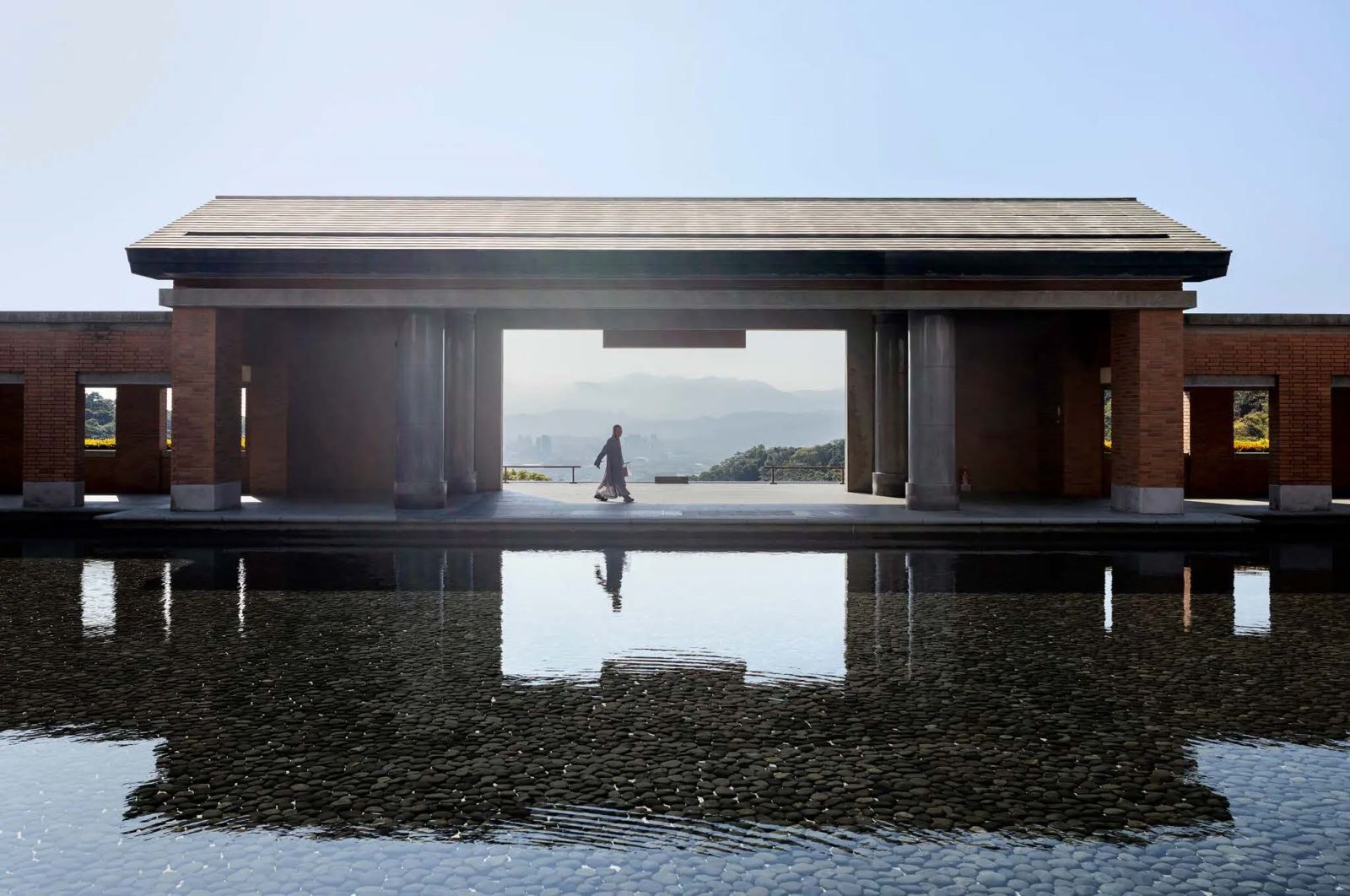
The Dharma Drum Mountain World Center for Buddhist Education in New Taipei.Maxime Fossat
Chung Tai Chan Monastery’s founder, Chih-an Wei-Chueh, was born in 1928 in China’s Sichuan Province but fled in 1949. He was ordained in 1963. Had he stayed behind, he almost certainly would have become a victim of the Cultural Revolution. As the translator Red Pine writes of that period, “The previous generation of spiritual practitioners, those in their 50s or 60s who would have become monks or nuns between 1960 and 1980, was missing. That generation never happened.” But I was beginning to notice, in certain quarters in Taiwan, a conspicuous silence surrounding those terrible years. Was the trauma still too fresh? Or were these four institutions, now with sizable followings on the mainland, deliberately steering clear of subjects that might upset the Communist Party?
The splendor of Chung Tai Chan was, if anything, even greater than that of Dharma Drum Mountain. It had been designed in the 1990s as an example of what 21st-century Buddhist architecture might aspire to be by C.Y. Lee, a disciple of Wei-Chueh’s and the architect of Taipei’s most identifiable landmark, the 1,667-foot-tall skyscraper Taipei 101, a contemporary expression of a pagoda. An hour’s drive from Taichung, Chung Tai Chan appeared on the horizon long before we were near the entrance. It was a great modern pile, with traditional accents such as Chinese eaves, the stepped mass of a pagoda and tented roofs. At its pinnacle, hovering over the emerald valley, was a great golden dome representing a mani, or pearl, nestled coyly within the opening petals of a lotus.
Daly and I were met by a triumvirate of monks in chocolate brown robes. Shi Jian Mian, in his early 40s, took the lead in showing us the majesty of Chung Tai Chan, which, as a Buddhist monk, he was obliged to display a certain indifference to. We came in past the Four Heavenly Kings, carved in Shanxi black granite. They stood in martial vigilance as caryatids, holding aloft a coffered ceiling. Elevator by elevator, we were swept up into a series of great halls, some with colossi of Buddhas in white, others with paintings on the ceilings — in reds, greens and blues edged in gold — inspired by the ancient cave temples of Dunhuang, China. Jian Mian called the meditation hall, with its vast wooden doors, “the heart of the building.” The soul of Chan (Zen), which derives from the Sanskrit word for concentration, dhyana, is meditation. Its adherents have no interest in text or ritual, believing only in the power of lightning flashes of insight. “When you meet the Buddha,” its fabled patriarch Linchi had said in the ninth century, “kill the Buddha,” for even Gautama, when deified, could be an impediment to spiritual growth.
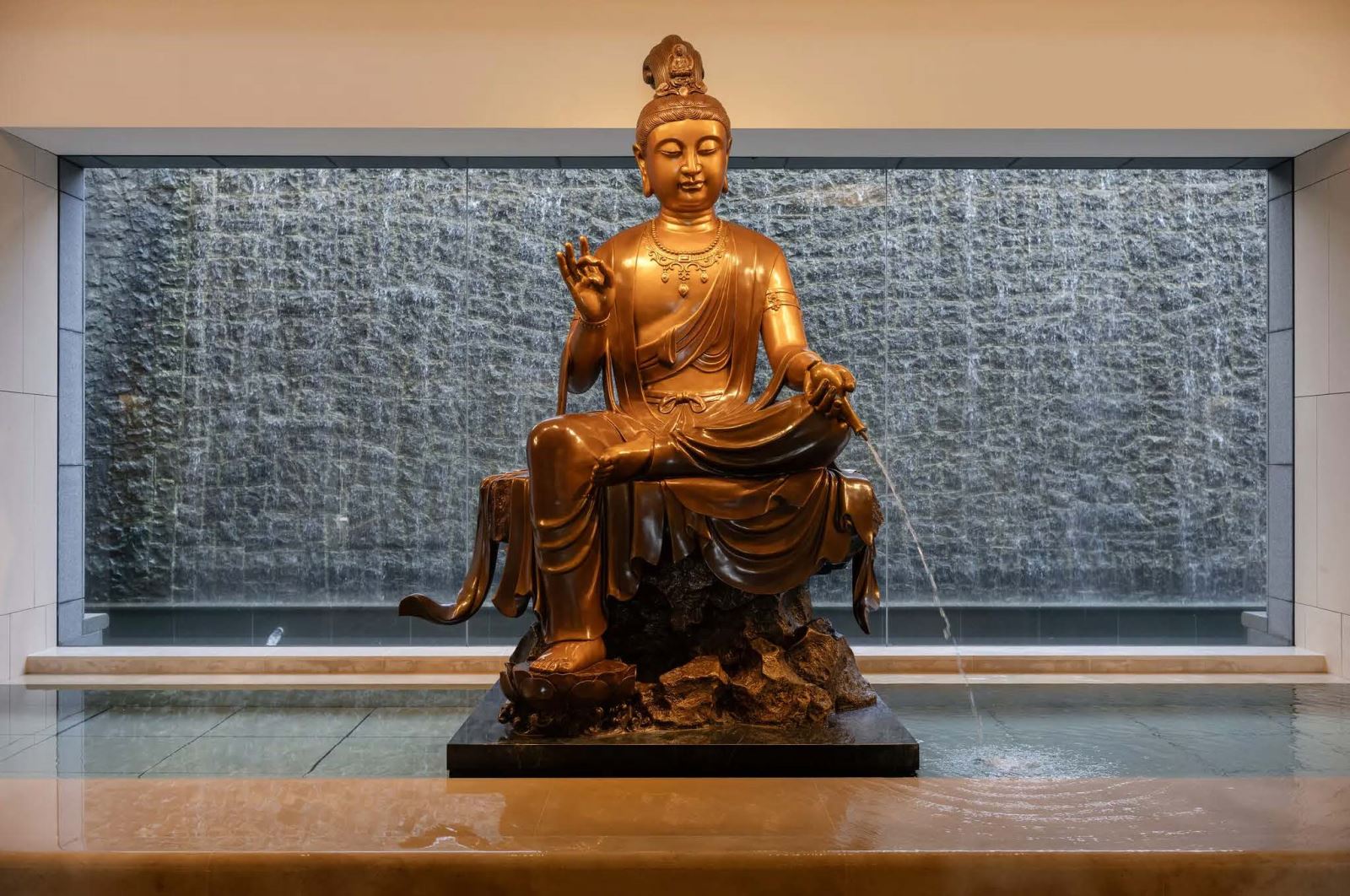
A Kuan-yin statue at Dharma Drum Mountain.Maxime Fossat
Chung Tai Chan also has a world-class museum of Buddhist art. The Indian rooms were but a preparation for an enfilade of galleries given over to Chinese art, from chubby-cheeked Buddhas of the Northern Wei period (386-534) to the slender Qingzhou style of the late sixth century. Several rooms of the museum deal specifically with the role of China as the translation house for Buddhist texts, which, having been retrieved from India, were translated in Chang’an, then disseminated farther east to places like Korea and Japan. Even as I was considering the scale of this awesome undertaking, a familiar voice from the past took me by the lapels, as if to let me know the tremendous labor it had entailed. It was the seventh-century monk I-ching. He wanted those who came after him to be made aware that for centuries Buddhist masters had left Chang’an to go to India in search of the dharma. Of the hundreds that went, I-ching claimed, “scarcely a tenth returned. Posterity should know” — his voice rang out across the ages — “the hardships of their ancestors! Far in the distance under the blue sky, the frozen earth or whirling desert sand shrouding the sun exhausted their strength. Not knowing this history well, future generations might think getting a sutra an easy task.”
AFTER CHUNG TAI chan, we plunged south. The land grew flat. There were corn and soybean fields, poly tunnels, warehouses and meandering green rivers. By the time we reached Fo Guang Shan Monastery, about 12 miles from Taiwan’s southern city of Kaohsiung, the sun had burned away the last remnants of morning haze and we found ourselves, on a tropical day in December, standing before another vast entrance of pagodas and a Buddha colossus.
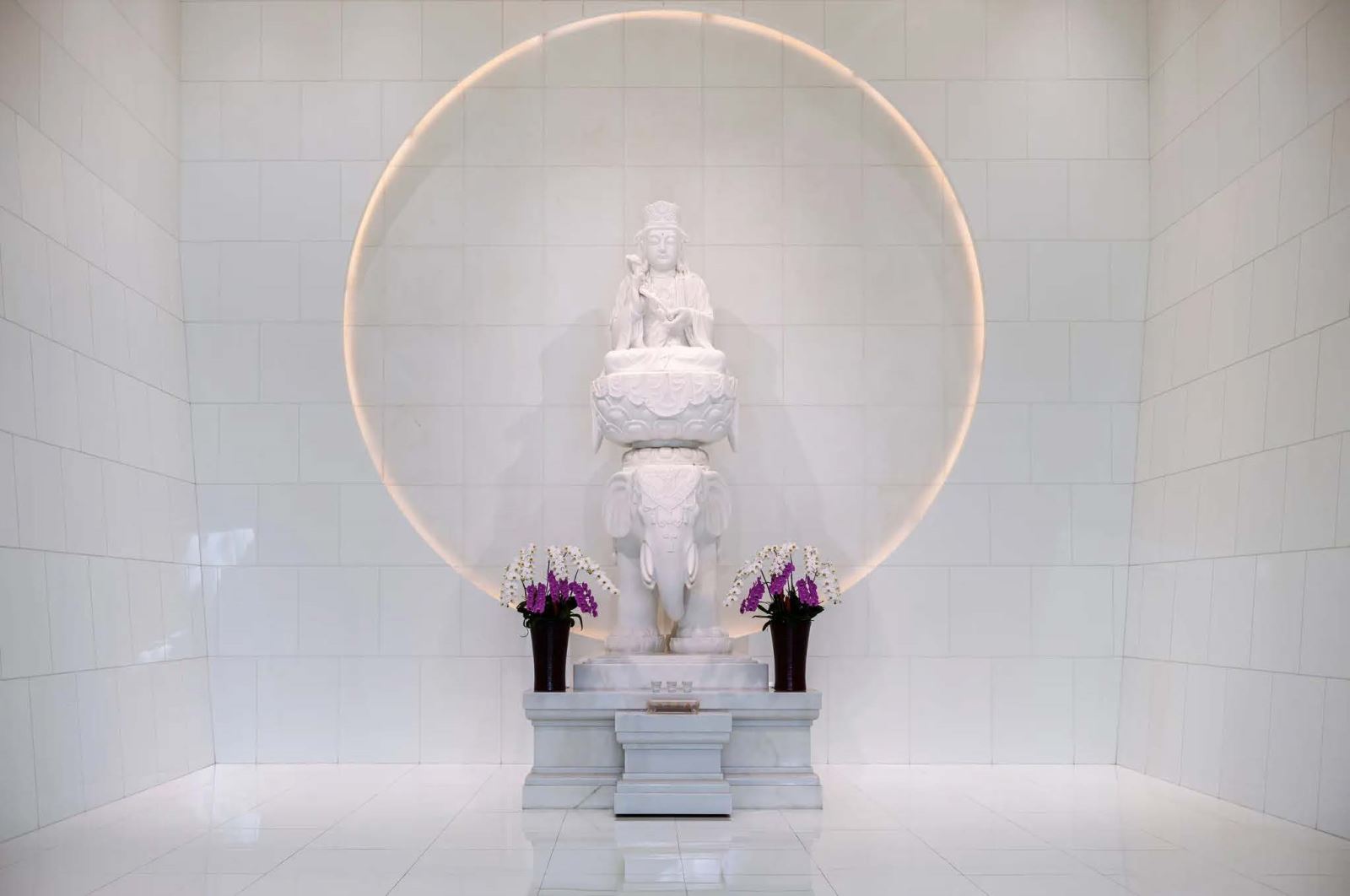
A hall devoted to the bodhisattva Samantabhadra in Chung Tai Chan.Maxime Fossat
Inside, after passing a lobby of gift shops and a Starbucks, we were again witness to the affluence of Taiwanese Buddhism. I was also beginning to detect a pattern, at this southernmost of the Four Great Mountains. Its founder, Hsing Yun, had also been born on the mainland, in 1927. Like Chiang Kai-shek, he had fled China in 1949 after the Communists defeated the Nationalists. But Fo Guang Shan’s followers were even more reticent about stating openly that theirs was a Buddhism in exile, not least because, in recent years, they’d been allowed back on the mainland, not to propagate Buddhism but to work at restoring Chinese culture after Mao’s vandalism. As we entered, Daly recalled an era when tourists would come over from China and mock Taiwan. They had stopped coming after the Covid pandemic and the subsequent rise of tensions between the two Chinas. Shuddering at the vulgar boasting of the tourists, Daly said, “I don’t miss them.”
The monastery’s museum was hosting an exhibition on the maritime Silk Road, which was another key vector in the transmission of Buddhism. The exhibition had a double LED screen, which you could drag across a map of the Buddhist world from China to India, watching the great Buddhist sites flash by: Borobudur temple in Indonesia; rain-blackened stupas in Sri Lanka; rock-cut caves in central India. In one hall, Buddhist figurines from different traditions rotated around one another, as if in a dance, from the Khmer, with its pulled-back lips, to the heavier-cheeked Chinese and the elongated Thai. There were images of the different styles of stupa and pagoda, as if Buddhism, at this eastern edge of the transmission, looking back at its spread, were delighting in its own diversity.
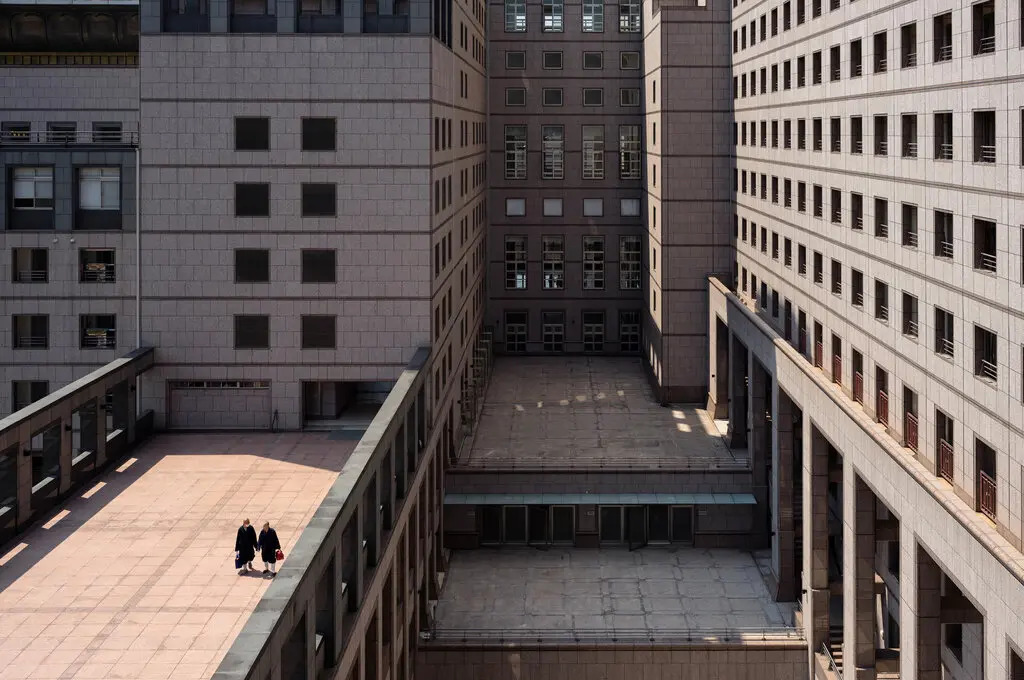
The Chung Tai Chan Monastery complex.Credit.Maxime Fossat
ON MY LAST full day in Taiwan, I was granted a glimpse of the power of alien ideas to shake up the calcified ways of the sangha. Tzu Chi Foundation, the island’s largest NGO and the premier Buddhist charity in the world, had been started by a woman, Cheng Yen, who was inspired by the example of Roman Catholic nuns. What had begun in the 1960s with 30 housewives depositing a few cents a day into so-called bamboo banks had grown into a behemoth that has attracted over 18 million volunteers worldwide through the years. Walking through its ultramodern hospital in Hualein (one of eight in Taiwan alone), Chad Liu, a spokesman for the organization, paraphrased the founder. “We’re all about inner development, spirituality, meditation, etc.,” Liu said of Buddhism, “but where are our schools and hospitals?” He circled around one of the great critiques of the Eastern religions when seen through the lens of the Abrahamic, namely that they were too concerned with metaphysics, and too little with social justice. Tzu Chi, with chapters all over the world, had become something of a Buddhist Red Cross, running hospitals, schools, house-building projects and disaster relief in over 100 countries, from Nepal to Zimbabwe.
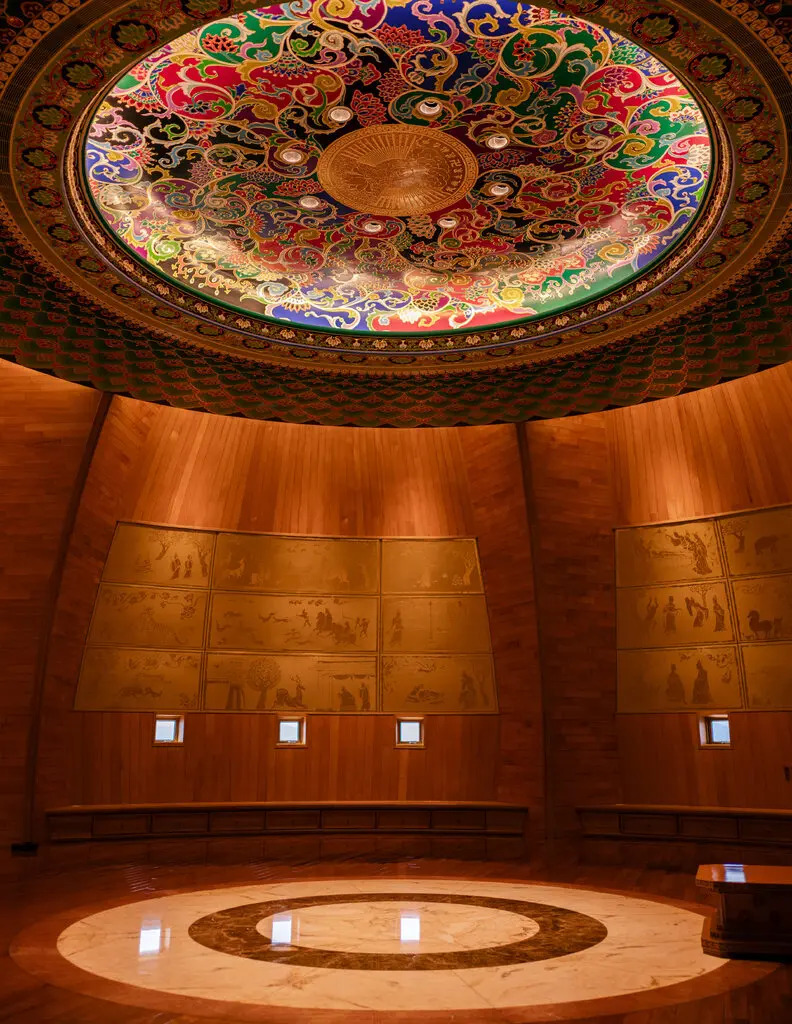
The cypress-paneled room inside the golden dome at the top of Chung Tai Chan is mounted with scenes from the Buddha’s past lives.Credit.Maxime Fossat
At Tzu Chi, wandering corridors among the sick being wheeled in hospital beds and past rooms reserved for people in extremis, where chanting and last rites occurred, I was brought face-to-face with those hard facts — age, sickness and death — that 25 centuries before had crept up on an unusually sensitive Indian prince, sending him out into the world in search of an answer to the problem of suffering. I’d started this trip through the Buddhist world wanting to know the secret of the dharma’s elasticity. I had seen it adopt form after shape-shifting form, sometimes almost to the detriment of the Buddha’s teaching. Now, toward the end of my travels, in this modern hospital in Taiwan, I was returned to those eternal questions that had first troubled the sleep of the Buddha. This was the true genius of the dharma: not its elasticity but rather its ability, when threatened by the demands of any particular culture, to return to those core concerns predicated on alleviating suffering. This focus on universality came from the Buddha himself. It was because he was able to cut through all manner of specificity, whether it be cultural, historical or tribal, in order to bring forth the distillation of dharma into an essence as clean as ethanol, that those who came after him could do the same. Whenever Buddhism got bogged down in place and time, the cycle would repeat and, once again, an ageless dharma would rise, ready to meet the needs of a new time.
I found it nothing short of wondrous that in this dangerous moment in Taiwan, when this repository of Old China was threatened on a daily basis by a bellicose mainland less than 100 miles away, the dharma could speak to the precarity of the present. At times, it felt that life in Taiwan was itself an exercise in Buddhist practice, for it demanded the island’s inhabitants live in an eternal present, free of all fear of what might happen next, not because it was unimportant but because it was out of one’s control. The dharma, which scorned the existence of all permanent states, was never a greater comfort than when everything — life, liberty and all that one deemed stable — was in the balance. It was in these moments, when the ground was cut from under us, that the mettle of our actions could truly be tested. The great physician would not have dismissed the danger of a Chinese armada appearing on the shores of Taiwan any day. It was real enough, but what was the cure? To live stewing in that fear, wasting what was best in us out of our need to cling to solidity, or to live one’s life as fully and nobly as possible, indifferent to outcome? The answer, at least from a Buddhist perspective, was obvious.
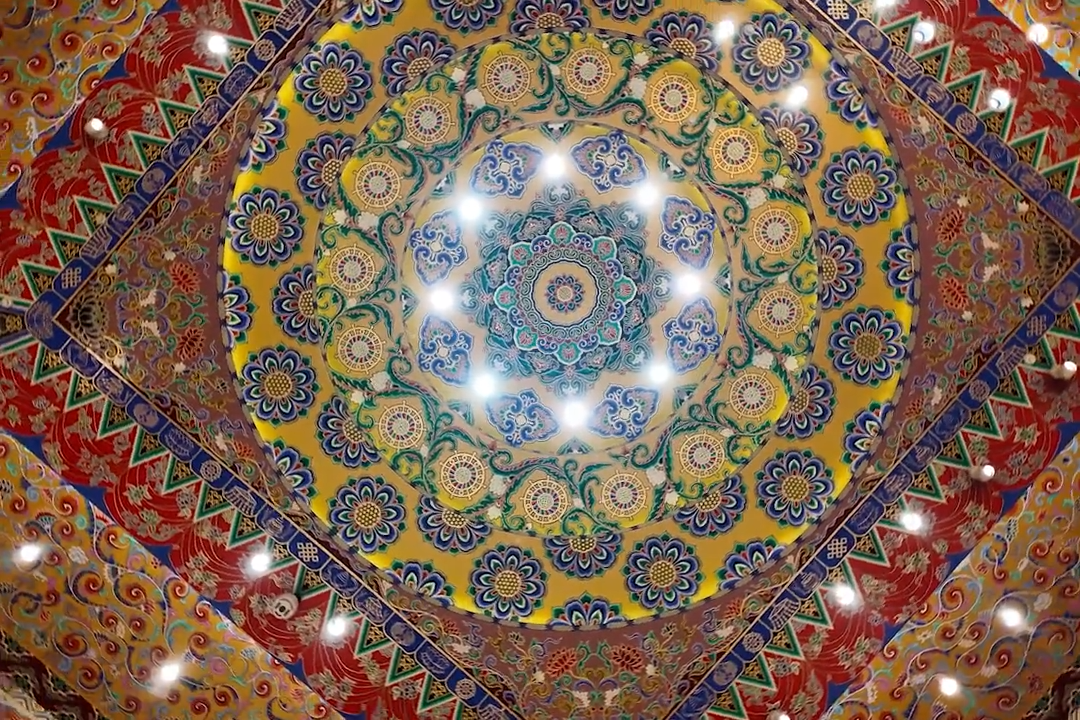
A hand-painted ceiling at Chung Tai Chan Monastery inspired by the ancient cave temples of Dunhuang, China.CreditCredit.By Maxime Fossat
The tragedy for the dharma was that it traded in a marketplace of faith dominated by the Abrahamic religions. Islam, Christianity and Judaism possessed certain features, such as a monopoly on truth, received wisdom, prophets, divine law and a moody Mosaic God, that were alien to the Indic religions. Moreover, two of the three — Christianity and Islam — were driven on by an evangelizing zeal that bore no resemblance in tone or certainty to those first Ashokan embassies that spread the good news of the Buddha’s teaching. The notion of an unbeliever, or one who had to profess faith on pain of eternal damnation, had no place in the Buddhist lexicon. The Eastern religions disdained the material world, looking to it mainly for the cosmic effect of our actions — karma, in a word — upon the progress of the soul through its many lifetimes. The Abrahamic religions, by contrast, had a laughably unserious metaphysics, fairy tales about heaven and hell with angels and demons, but they were unsurpassed as a shaping force on the physical world in such matters as the establishment of law, polity, social justice and the brotherhood of man. Their holy books read almost like manuals on how to set up the world, down to the intricate details of commensalism and toilet. Since ordinary people are more likely to want to be told how to live their life than indulge in speculations about the nature of reality, the soul and the universe, Christianity and Islam invariably won the contest for adherents.
Over time, this created a real dilemma for Buddhism. It could either allow itself to be remade in the image of the Abrahamic faiths, which had partially occurred in Myanmar, Sri Lanka and Thailand, where Buddhism was turned into a moralizing force with extremist tendencies. Or it could choose, in this present era of popular revolt, to stay above the fray, addressing itself (as it so often had) to the educated classes. Few teachings were better equipped to confront the problems of modernity than Buddhism, be it in relation to materialism, desire or just not suffering over what you can’t control. The trouble was that, in being able to deal in such complexity, Buddhism acquired that aloof superior air — here was a religion for the intellectual and the scientist, if ever there was one — that had always been its undoing, making it the target of backlash in society after society. It was a stubborn conundrum, worthy of Buddhist meditation: You had to get Siddhartha out of the palace in order for him to become the Buddha, but you could never quite get the palace out of Siddhartha. Was it enough to be the religion of a select (powerful) few and never compromise on quality, or did one have to win the hearts and minds of the laity, even if it meant dumbing down the message of the Buddha?
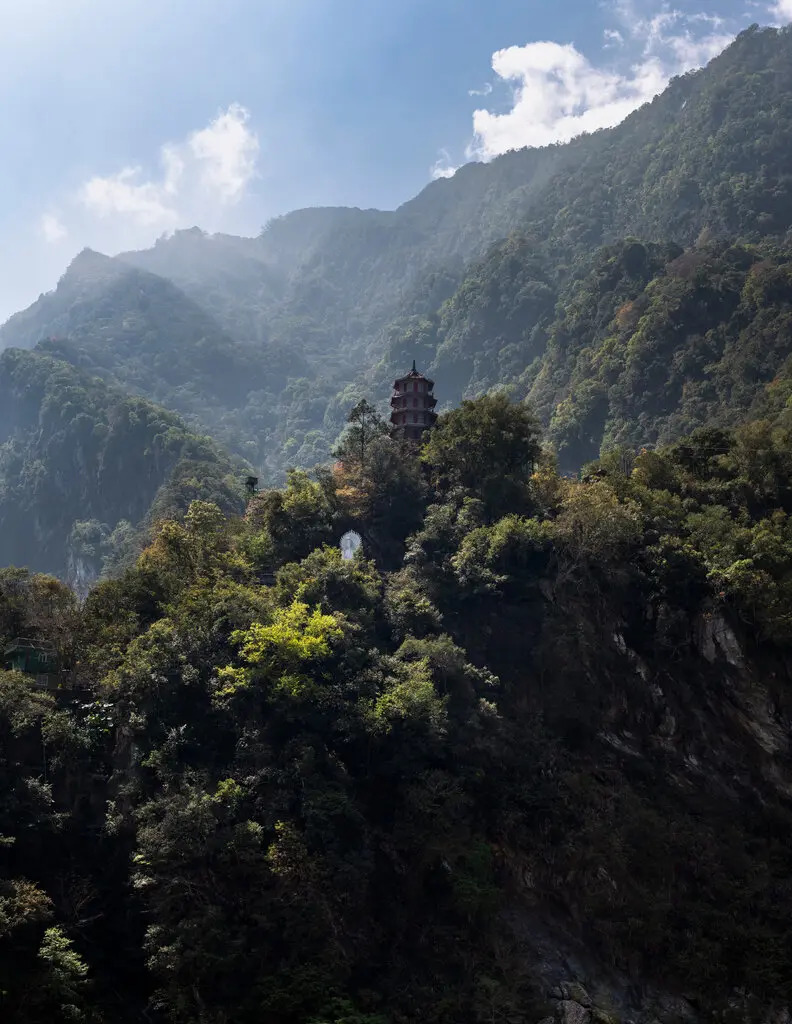
Xiangde Temple near Taroko Gorge in eastern Taiwan.Credit...Maxime Fossat
It was the question that had stalked the dharma over the centuries, and now, at the end of my Buddhist journey, I was struck by how much Gautama Buddha still eluded me, almost as if he himself were an expression of that fluidity and transience he had warned us was all we could count on. That fugitive quality, in which playfulness is like a vessel for philosophical insight, had never been more apparent than on that afternoon at Chung Tai Chan. The triumvirate of monks in their brown robes had taken us up and up, like Charlie in his glass elevator, through libraries of sutras in all the great Buddhist languages, with carved jade panels on the walls, past a Tang-style pagoda in Burmese teak representing the three jewels (the Buddha, the dharma, the sangha) until we reached the pearl room itself. Looking down at the valley below, the youngest of the three monks, Shi Xing Zhen, who said he had grown up in Los Angeles, explained that the mani “represents the inherent nature of all sentient beings.” The aim of life, by whichever method, whether it was “a slow graduated path or sudden enlightenment,” was to recover the pearl-like clarity of our true nature, which our desires had clouded.
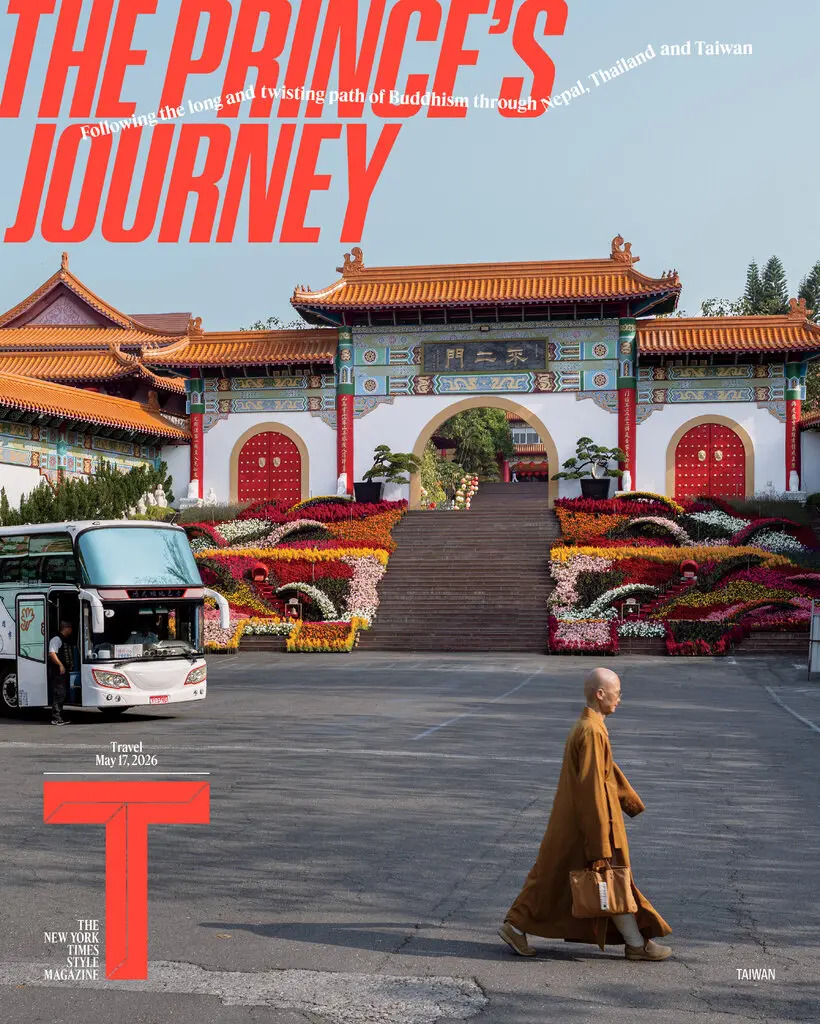
On the cover: Fo Guang Shan Monastery in Kaohsiung.Credit...Maxime Fossat
At the very top of the monastery, in a belvedere of sorts, sat a small statue of a lacquered Buddha from the Ming period. At the center of that atticlike room of polished wooden floors was a marble sphere. Jian Mian invited me to step within the circle and say some words aloud. When I did, their echo came back to me, even as it was inaudible to those standing outside the circle. Here, in what felt like the throne room of the Emerald City in “The Wizard of Oz,” was a reminder that in Buddhism one had only oneself to fall back on. True, that self, too, would ultimately prove illusory, but what of it? The deathless heart of the dharma was that truth itself was the ultimate comfort, and there was nothing to fear in the freedom from illusion. It was where real possibility began.